
Two weeks ago, we had a brief look at the humble beginnings of the UKEsender broadcast radio station, which has occasionally broadcast during the UKA student festival that gets going once every two years in town. We described how it emerged from it’s humble origins, from a means to demonstrate the capabilities of radio for the general public, to a wish to broadcast from the new Student Society building. Unfortunately, after 1933, things went quiet for a good while and then came WW2 that put both UKA and ordinary operations in the club on hold.
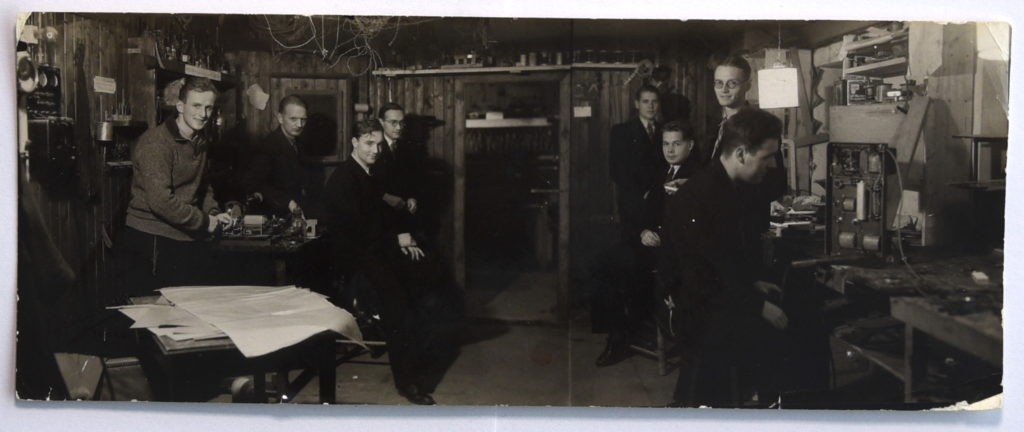
That being said, ARK was immediately ready to start anew in 1945. In part to share news from UKA and the festival, but also to keep old members who were abroad and had still not returned from the war up to date with what was happening in town. The transmitters used were leftover material after the German occupation, three 600W HF transmitters in total, where the NTH (today NTNU) had been given two and Trøndelag Kringkaster at Tyholt had been given one. All three were used by the UKE-sender in 1945, and the two best ones were reused subsequent years until 1959. One of them were used as late as 1967. According to legend, the permit to broadcast for UKA 1945 arrived by telegraphy in the middle of the UKA premier party.
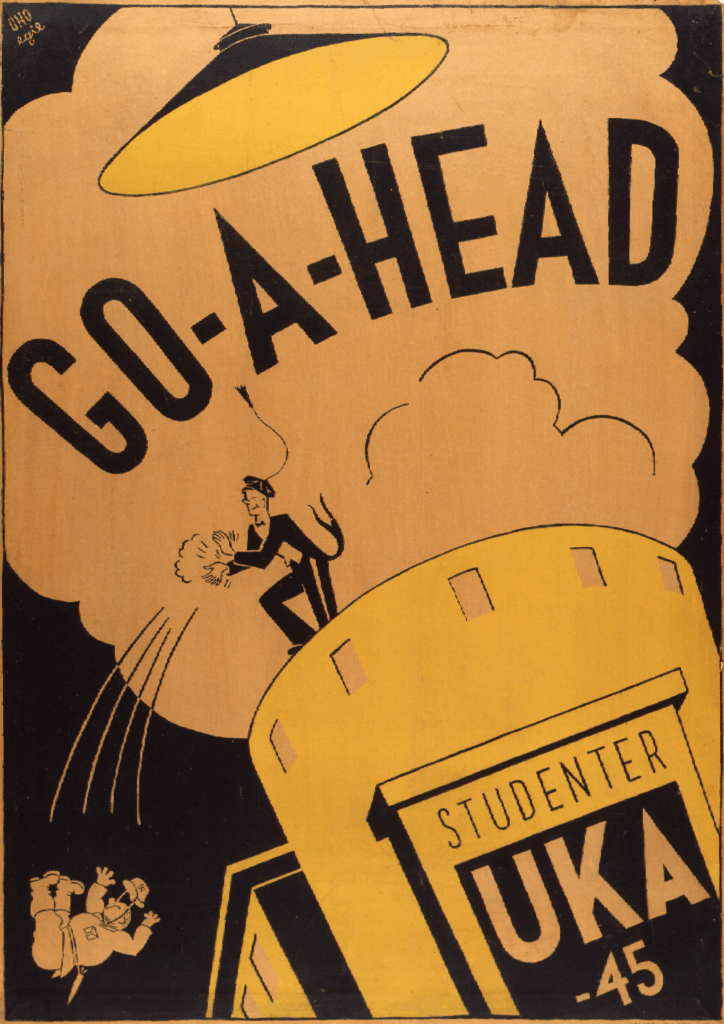
The very fat, tossed soldier, didn’t get to keep his radio equipment.
Courtesy of UKA
For UKA in 1947, a proper studio was built in the loft of the student society building. This was later improved and is still there today. Around that time, the UKE-sender was also split into a programming group, us as a radio-technical group, and the amplifier committee as the sound-technical group. The split between us in ARK and the amplifier committee had grown bigger after the war, and we in ARK had for instance been given our own room down the hallway instead of sharing rooms with them. The programming group were usually recruited by the UKA festival for a year at a time, and as such had the potential to change a lot from iteration to iteration, while us at the technical side were more the same people volunteering several years in a row.
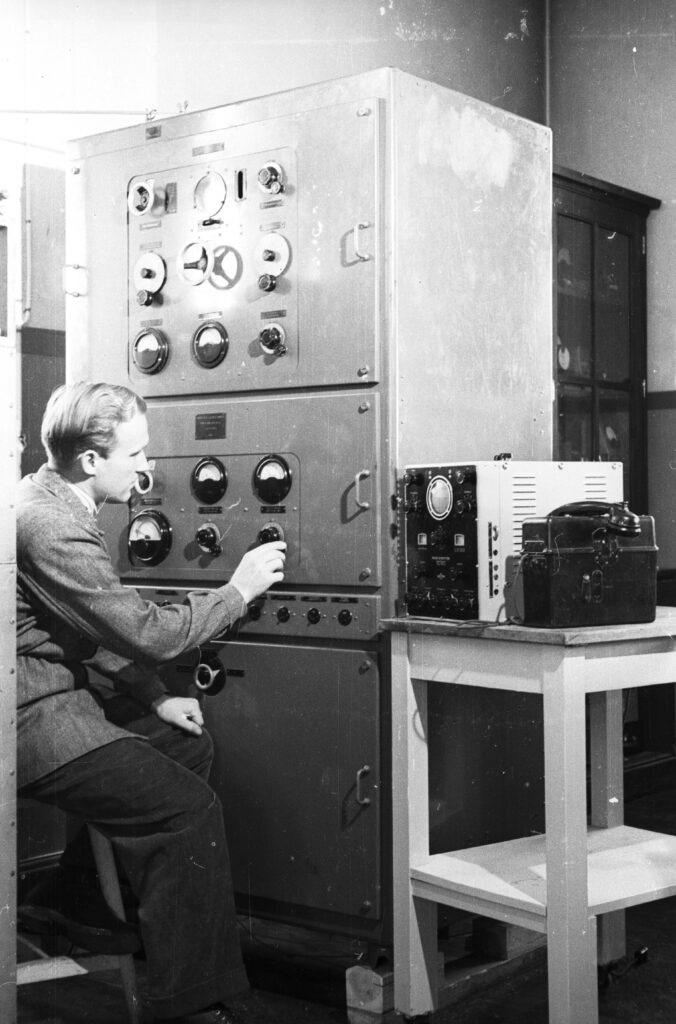
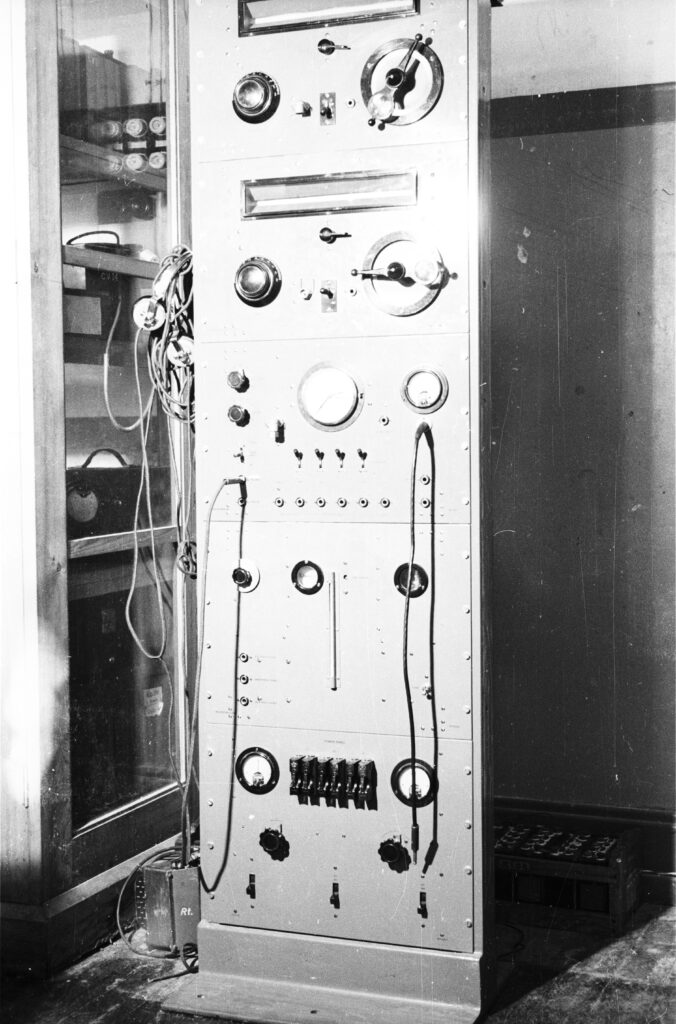
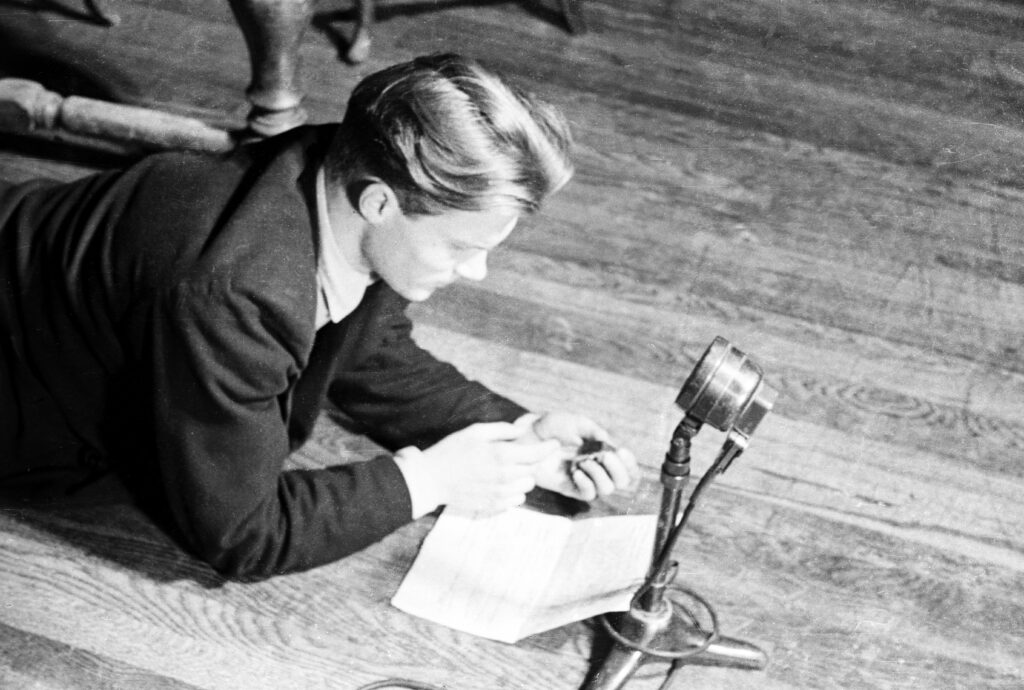
In 1959 a new transmitter was made, all in-house. This one was used as an attempt for some of Norway’s first stereo broadcast. One channel was transmitted on HF, the other channel was transmitted on MF. A rather crude solution, but anyone with two radios could potentially pick up the signal.
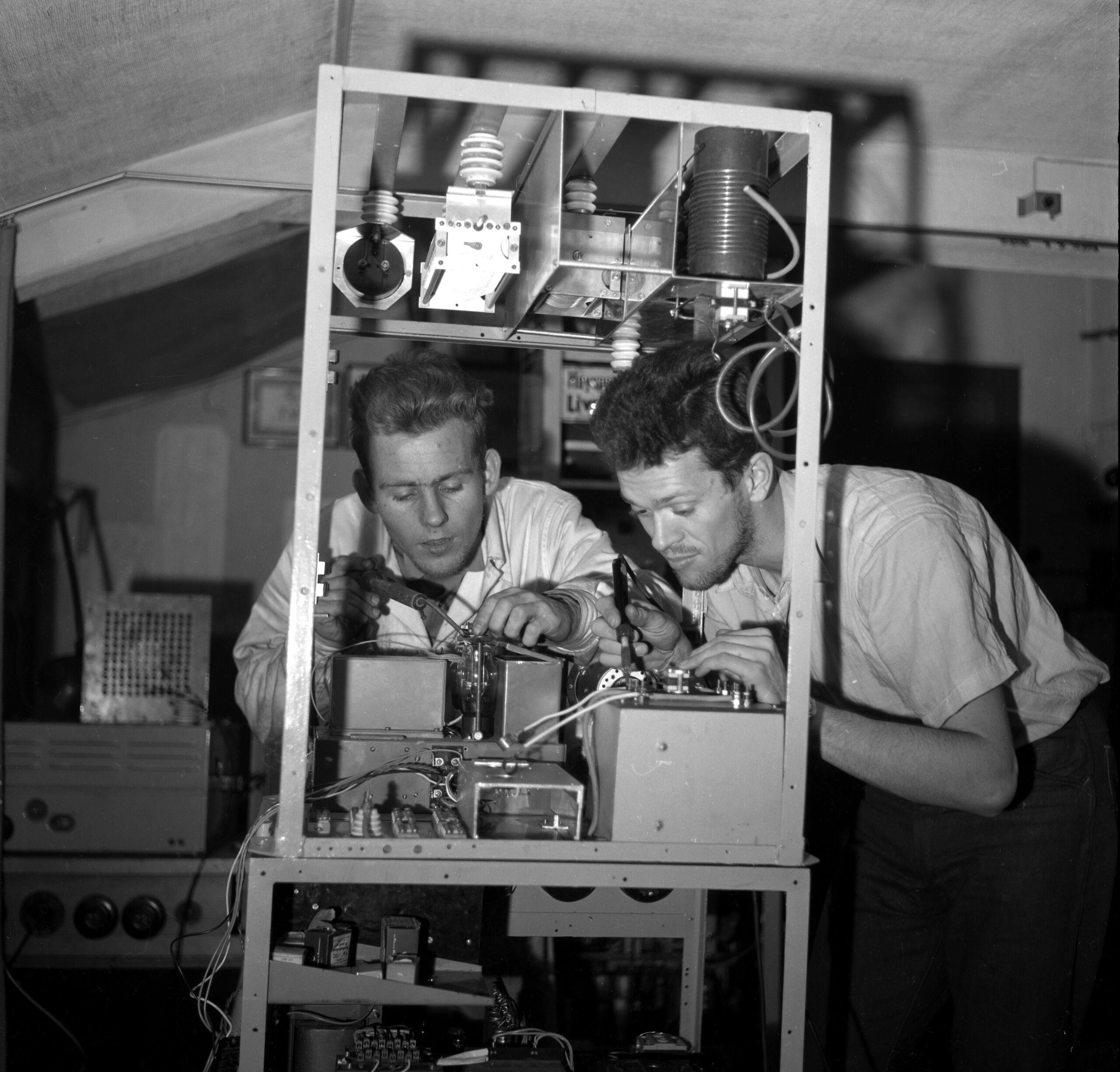
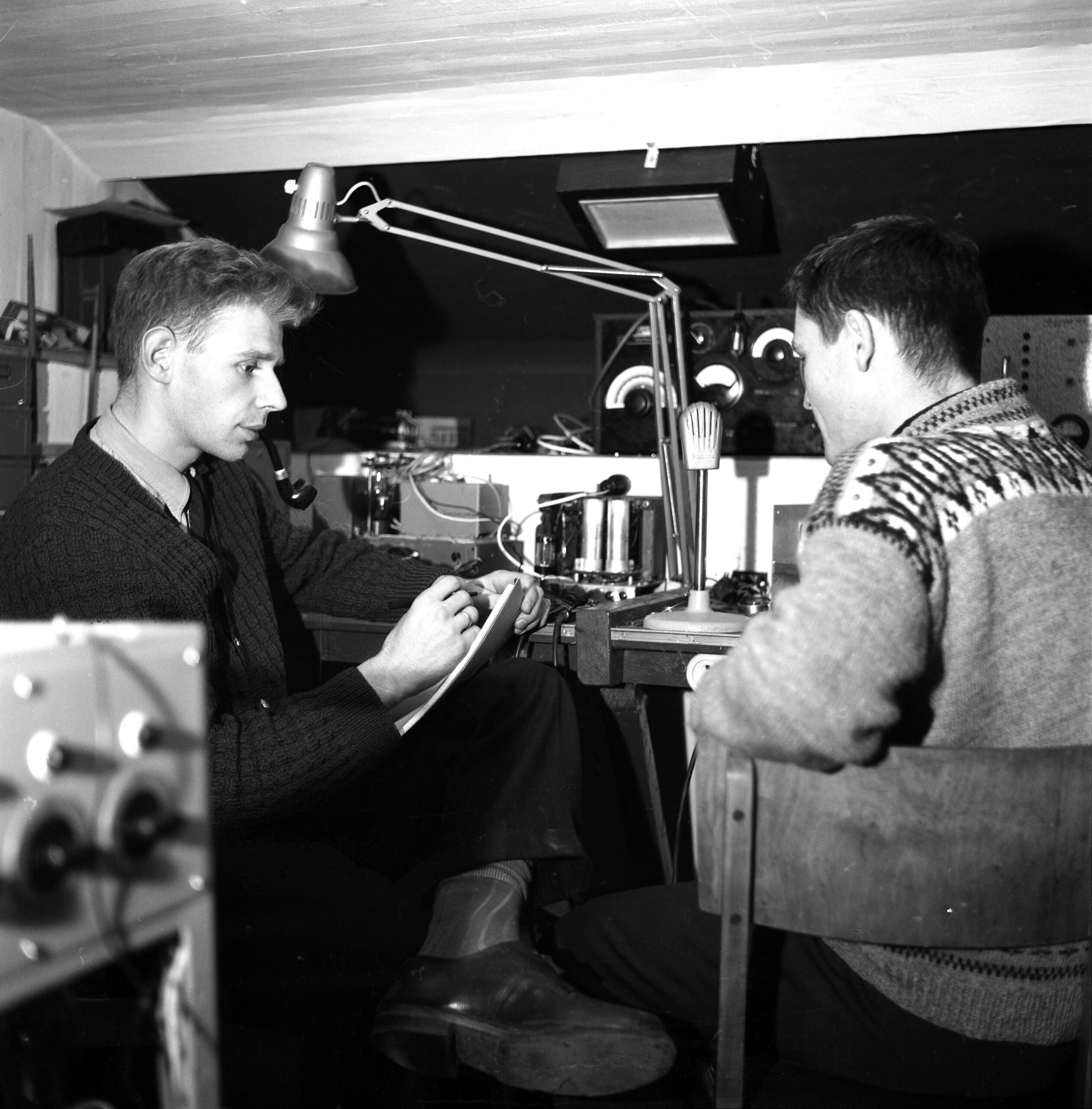
In 1965 we built a FM transmitter, in 1967 we built a 1.5kW HF amplifier, and in 1969 we got another and more friendly HF amplifier (the first one was re-tuned for the HAM radio HF bands, and is today known as “Store-PA”). This marks the most iconic setup of the UKE-sender, which would be standard until 2003: One MF transmitter, one HF transmitter and one FM transmitter. However, something unexpected would happen shortly after the start of the 1970s.
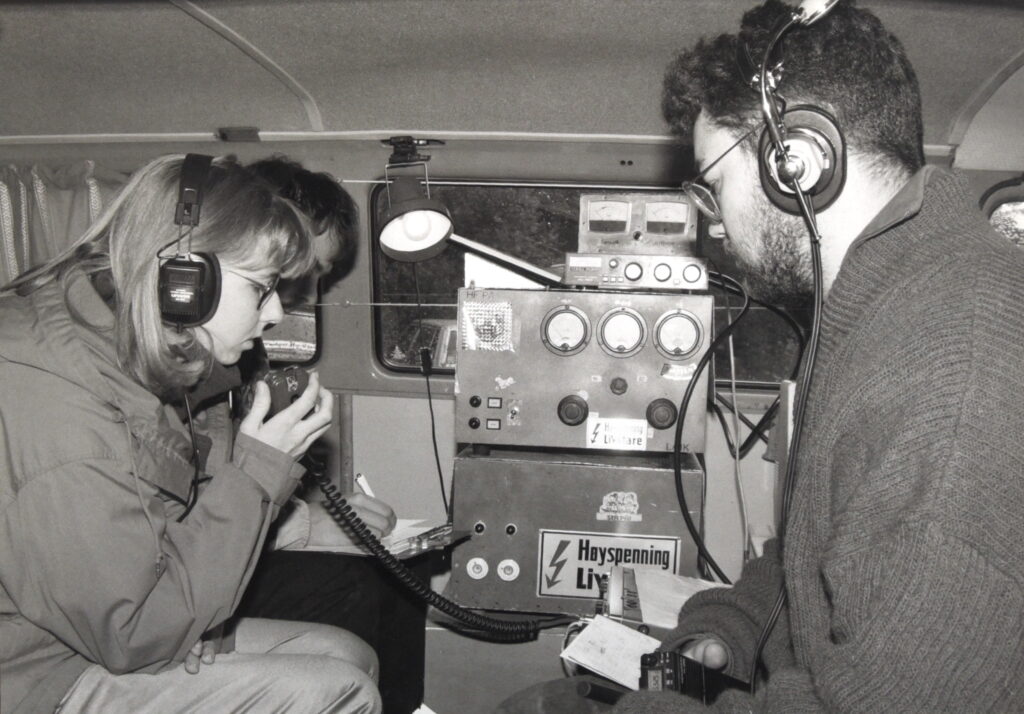
With, Mona LB9XD, Jon LA9NGA and Johnny LA5IIA
Typically, the UKE-sender had been allowed to broadcast when NRK’s scheduled transitions were done for the evening. During the earlier years, this was not that late and most people would have no issues tuning in. In the late 60s and early 70s, however the broadcast times of NRK was extended with quite a bit. The UKE-sender transmission window was in turn pushed later and later in the night.
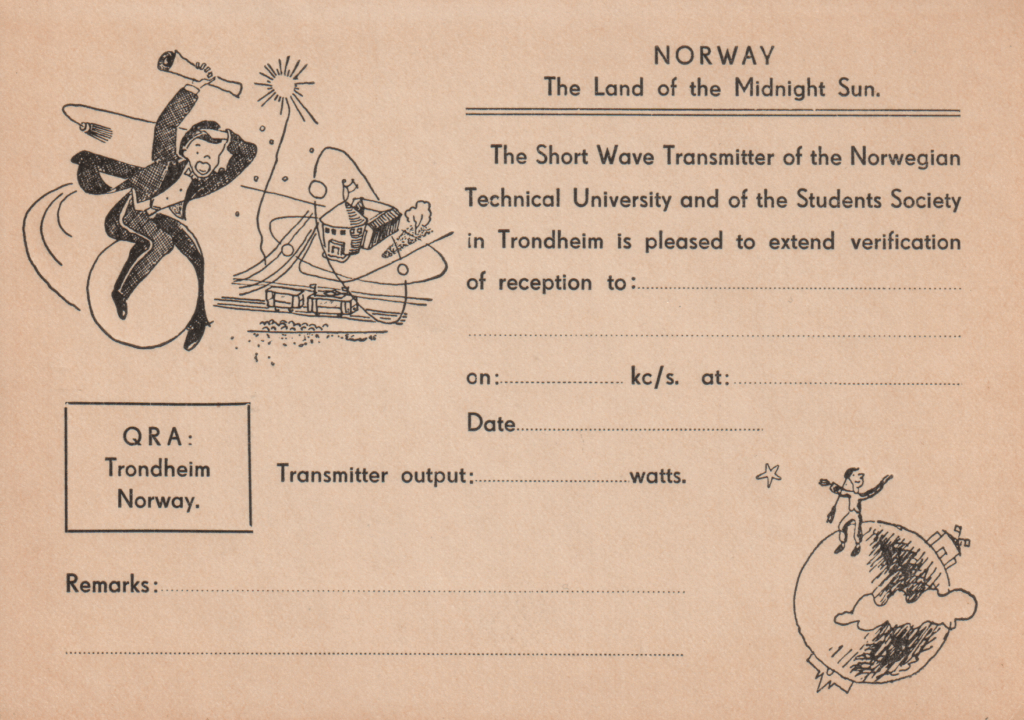
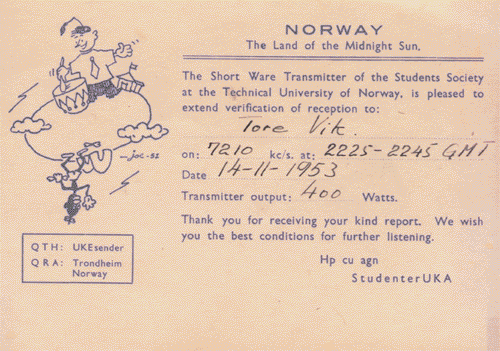
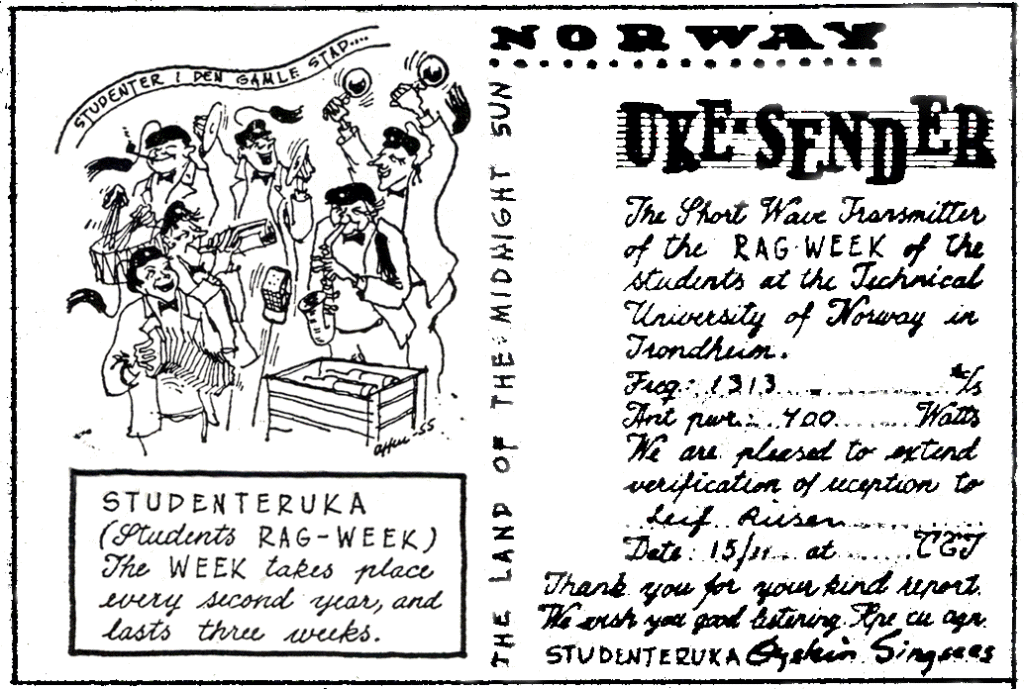
Tensions with NRK were also quite apparent in other aspects. The UKE-sender had experimented a little with broadcast TV in 1955, and tried again in 1973. NRK was not too happy about this, and limited the permit to only cover within the building. In 1977 and 79 we were denied a broadcast permit, according to some rumours in part due to the 1976 student festival broadcast in Ås (near Oslo) getting a little bit too political for NRKs taste. A new permit was however issued in 1981, with very short notice. A PLL was quickly built to adhere to the strict regulations that were given, as the new permit was on the complete opposite side of the FM band compared to earlier years. There was no time to ready the other transmitters in time, so re-tuning the FM one was the only hope. Miraculously, we eventually got it to work in time.
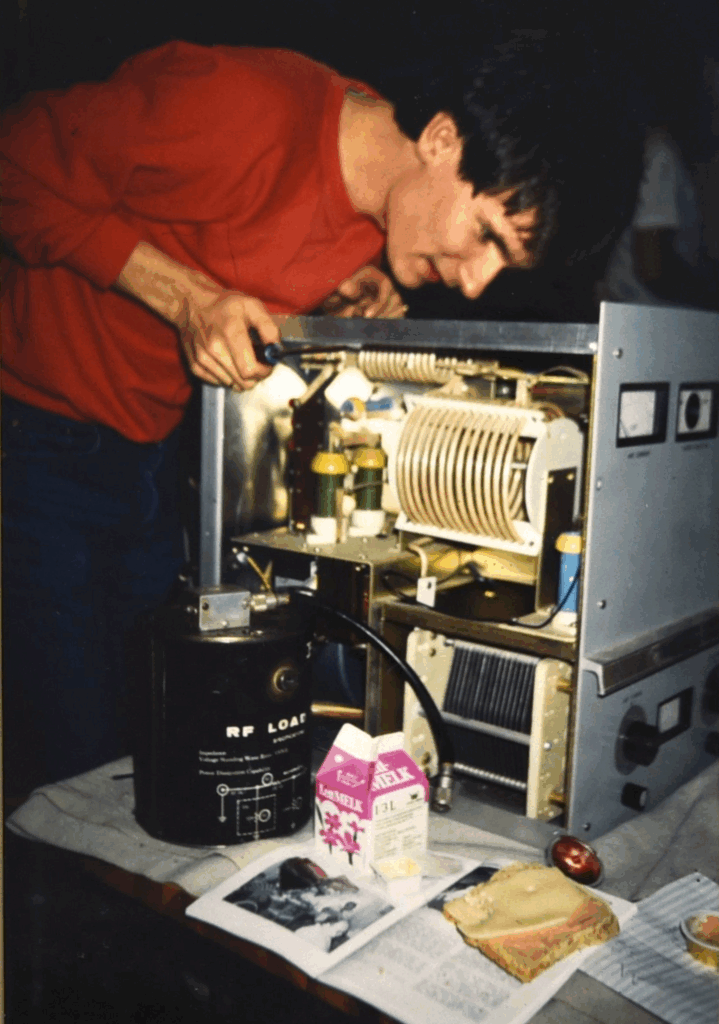
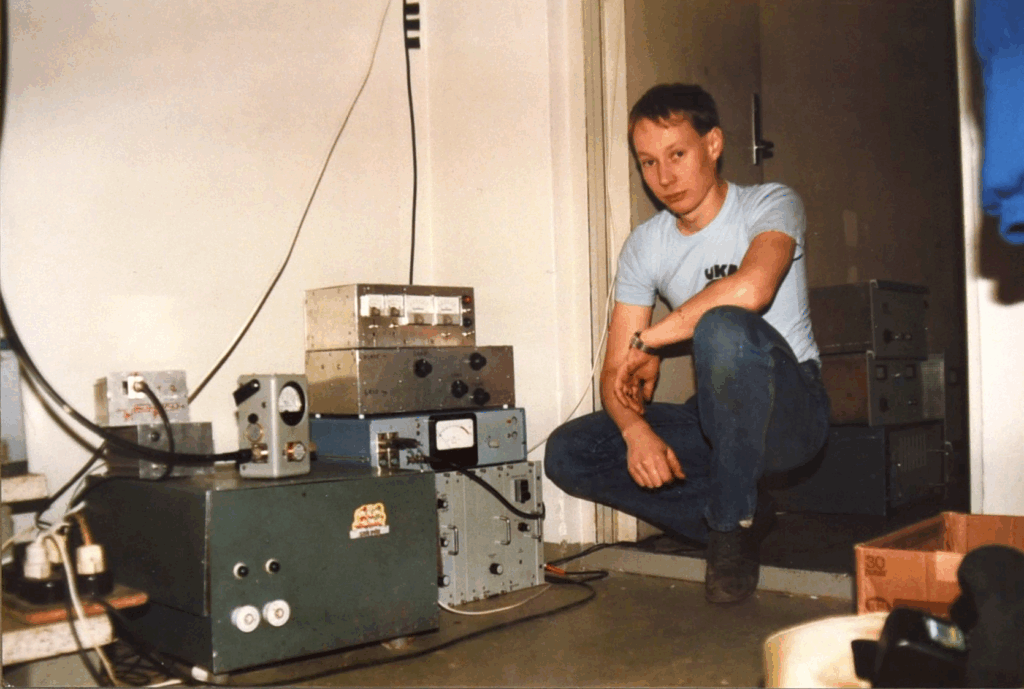
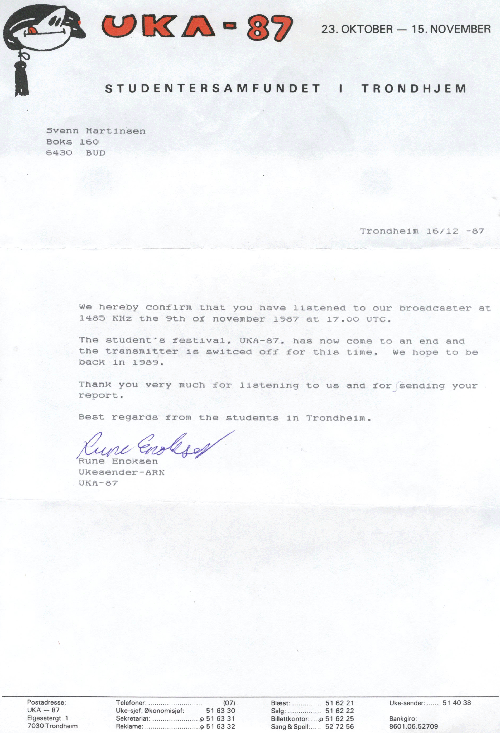
The programming group of 1981 did indeed have a very good time. So much so that the ball started rolling trying to get a permanent student-radio broadcast going. The monopoly of NRK had started to lessen, and there were openings for making more permanent local broadcasts legal. This came in wake of that the 1970s had in general seen a wave of illegal local broadcast stations all over the place. Bureaucracy would however prove to be slow, and the permit for a permanent student radio was first approved in 1984. This was all done by the group that originated from the UKE-sender programming group of 1981, and had little to do with us in ARK. These days the student-radio has been renamed Radio Revolt, and is a part of the Student Media group at the Student Society. When the UKE-sender programming started up again in 2021, it was solely arranged by Radio Revolt using their own existing facilities and resources.
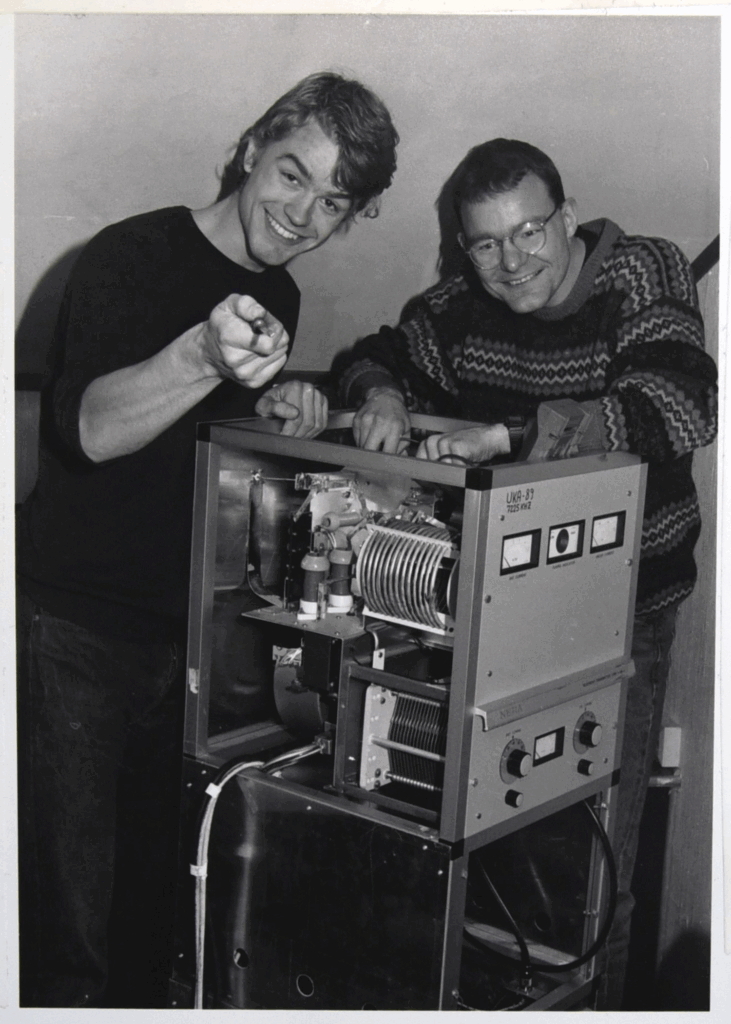
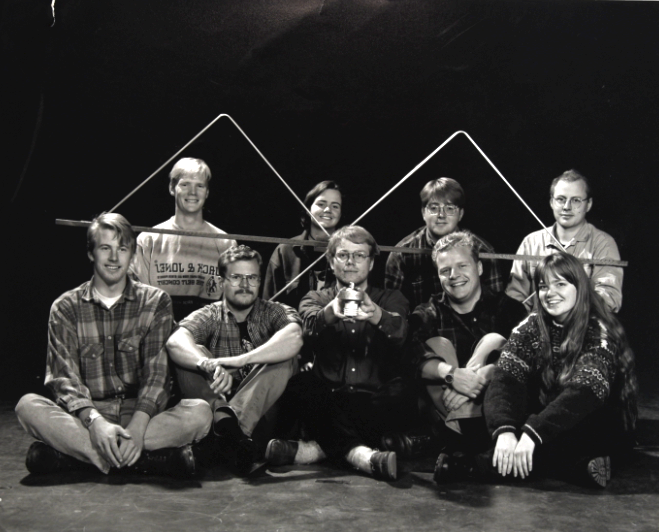
Otherwise, during the 1980s, the FM transmitter was most consistently used. The HF transmitter was used some years, and occasionally attempts were done at improving the MF transmitter. Eventually in 1987 all three bands were finally on the air using what would become the final iteration of the transmitters. Transmissions would continue during UKE-festivals throughout the 90s, but in 2003 it was decided to discontinue the UKE-sender. The FM transmitter was accidentally “lost” shortly afterwards due to some miscommunication, and this made it very difficult to argue for continuing the tradition. UKA still has the MF and HF transmitters in storage, but they have not been powered for a very long time now.
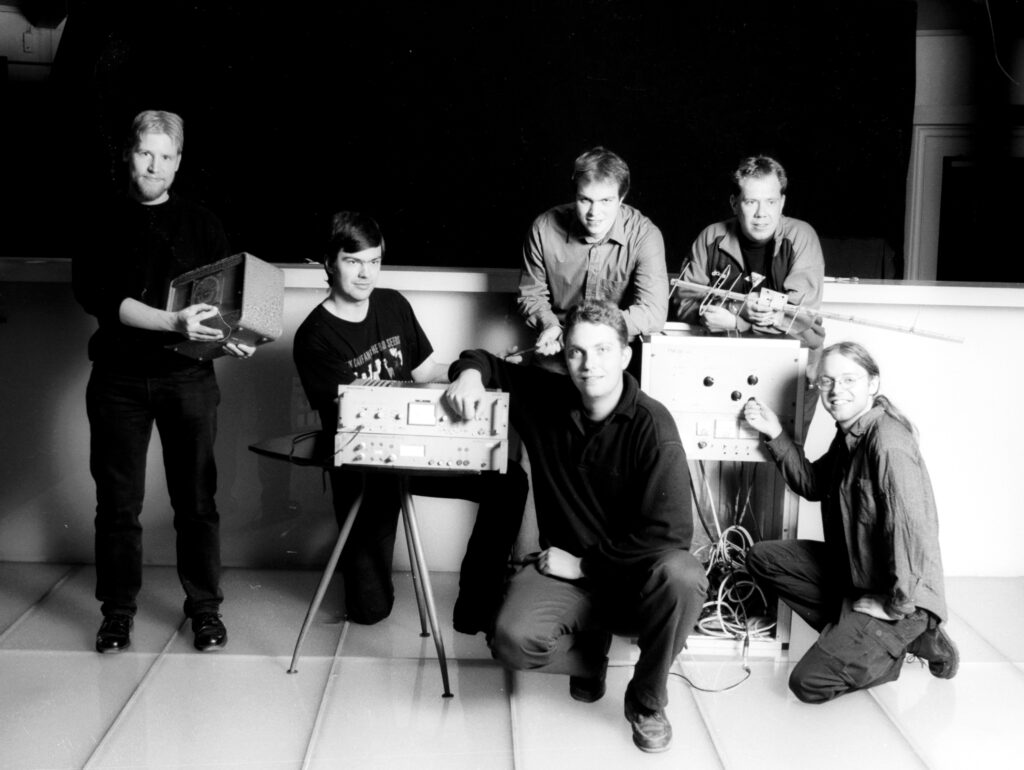
Photo: Foto.samfundet.no
On the bright side, the student radio has at least started up with UKE-sender programming again a few years ago, and as you may read in our previous post we are helping them with broadcasts again. Not in the same way as before, as we are now using commercial equipment. We are less directly involved and don’t have any particular responsible positions in the UKE festival related to this, but in some way we do provide the means for them to get properly on air still.
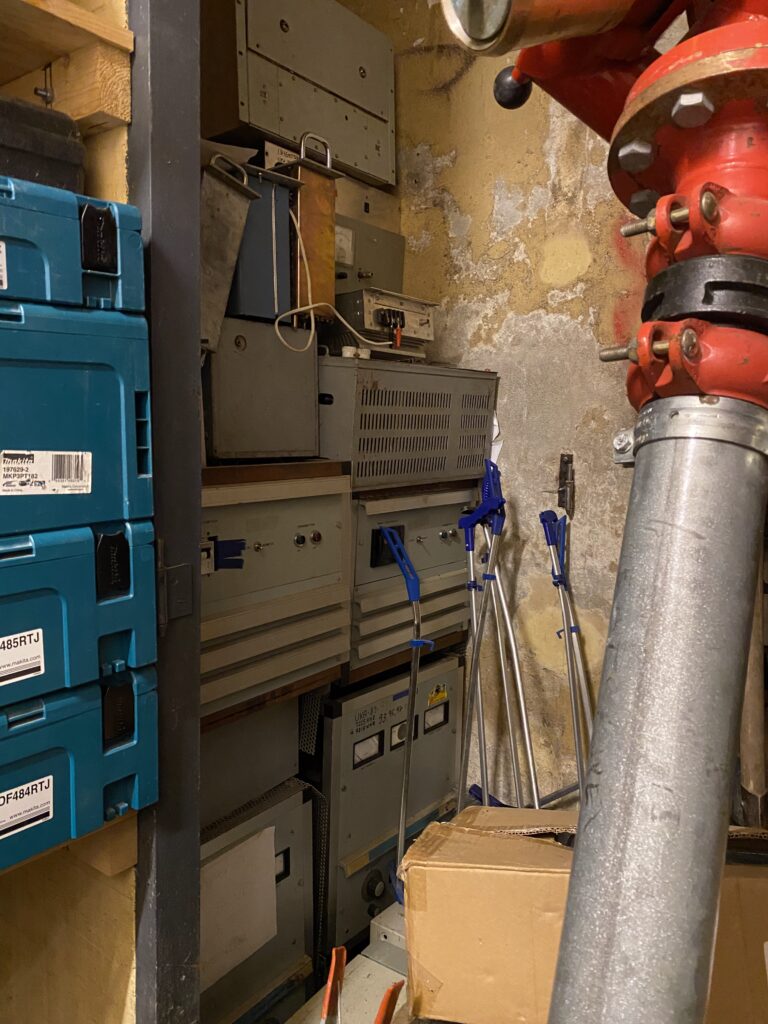
Photo: LB5PI

Leave a Reply