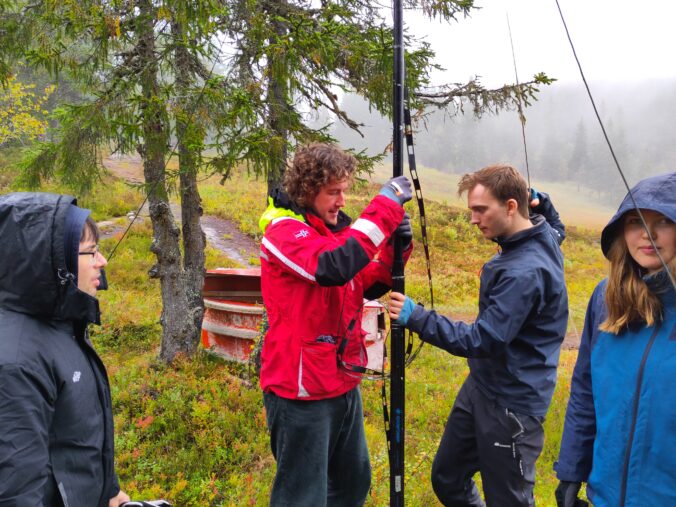
We have earlier organized a few portable trips alongside the license course to give some practical experience to the license course participants. We aim to make this an easy and pleasant trip for both new members, old members, and non-member license course participants.

We were in Estenstadsmarka last autumn, so this time it was Bymarka’s turn. The initial plan was to go up to Gråkallen, where we were last winter. However, as the date neared, the weather forecast predicted a lot of wind and a lot of rain, so we started considering other options. TThe simple option we landed on was going to Skistua, right next to Gråkallen. This would be less windy, and there is a ski playground with a few wooden sheds scattered around that we could use. We actually camped here on the same excursion in the autumn of 2023.

We have earlier experienced that just calling randomly on the bands gives few answers. We end up spending a lot of time calling, and not as much time as hoped making QSOs. Last winter, we tried POTA (Parks On The Air) for the first time on this kind of trip. That proved to be a huge disappointment and gave very little activity. However, a single bad day was not enough to discourage us from trying again, so we once again tried this as a POTA activation. POTA is advantageous for us on this kind of trips since it allows club activations. This allows us to use LA1K and run a common log, and allows unlicensed operators to participate under §9 in the Norwegian amateur radio license law.

We put up two antennas. First, our 15m flowerpot antenna, and then our multiband inverted V doublet. The 15m flowerpot worked well and gave us the majority of the QSOs, but no DX. The doublet was put to use on both 17m and 20m, retuned by our old Heatkit tuner. Same as usual, we relied on our trusted FT-891 and our FT-857 for exciting the antennas.
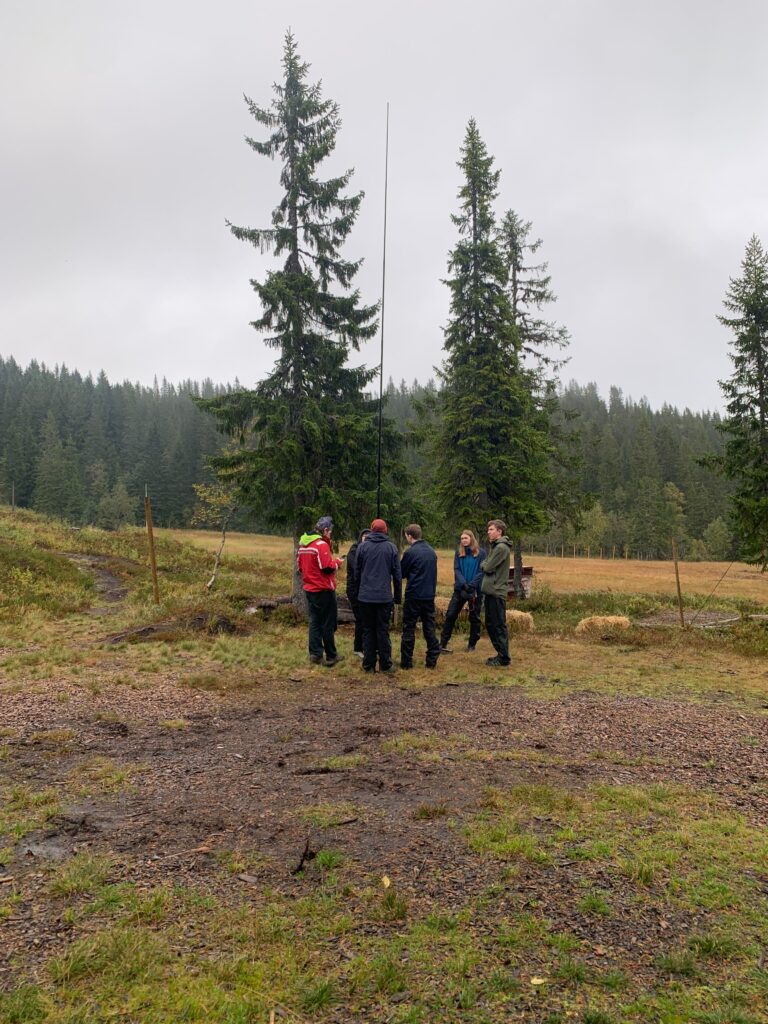
The intended learning outcome for the participants was primarily two things: To get a visual overlook of how antennas look and how they are connected to the radio, and to get to know the structure of a QSO. With the first one out of the way, it was now time to get on the air.
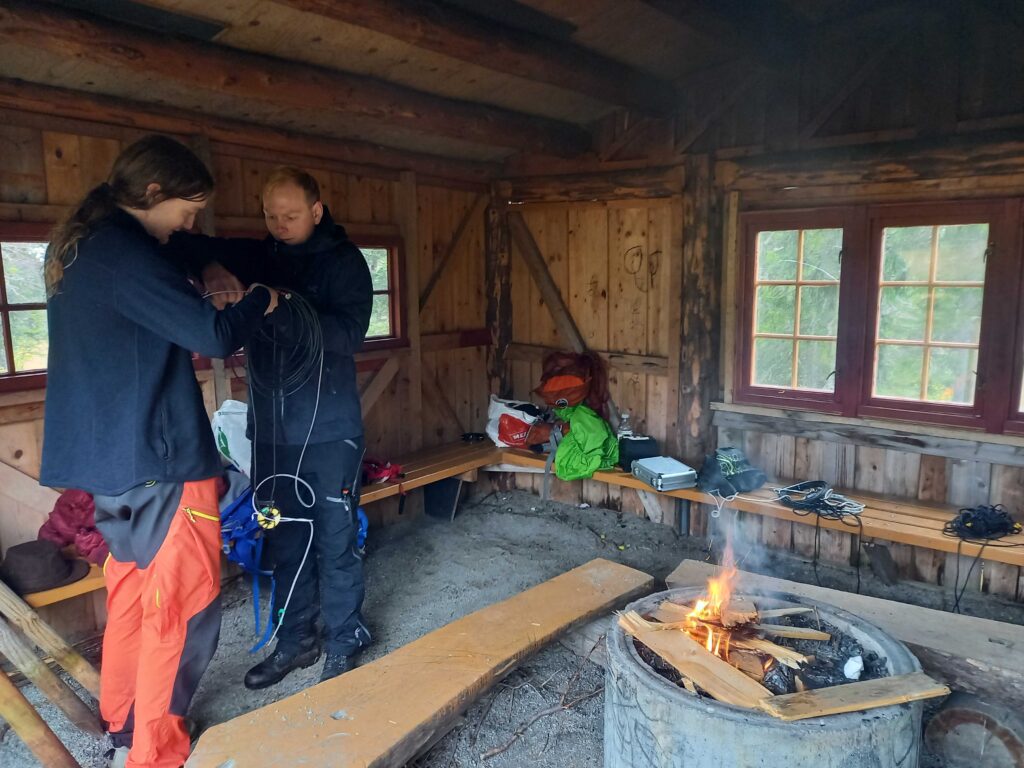
All of the unlicensed attendants got their turn at the microphone. Some in an intense POTA-pileup, and some in calmer conditions. The conditions seemed to be good on both 15m and 20m, but we had less success on 17m. This was likely not due to the ionospheric conditions, but maybe fewer listeners were at the WARC bands. In total, we got 59 QSOs, more than all our POTA QSOs until now combined.

We also got a pleasant visit from LA7PSA. He called on the local repeater LA7RR, and we answered that we were out as /P. He put up a 20m horizontal delta(?) full-size loop at our camp site. This led to a discussion about whether it can be called a delta loop when it is not triangle-shaped, but we did not conclude. If anyone knows, please let us know.

Regardless of what we call it, we tried a simple quantitative reception comparison. We tuned into a relatively stable signal on the band and compared the S-meter readings. Both the doublet and the loop reported about S5 for the signal, but the noise floor for the doublet was lower than the noise floor of the loop. We expected the loop to be quieter than the doublet, so this was quite surprising. However, this simple comparison should be interpreted very cautiously and does not necessarily generalize.
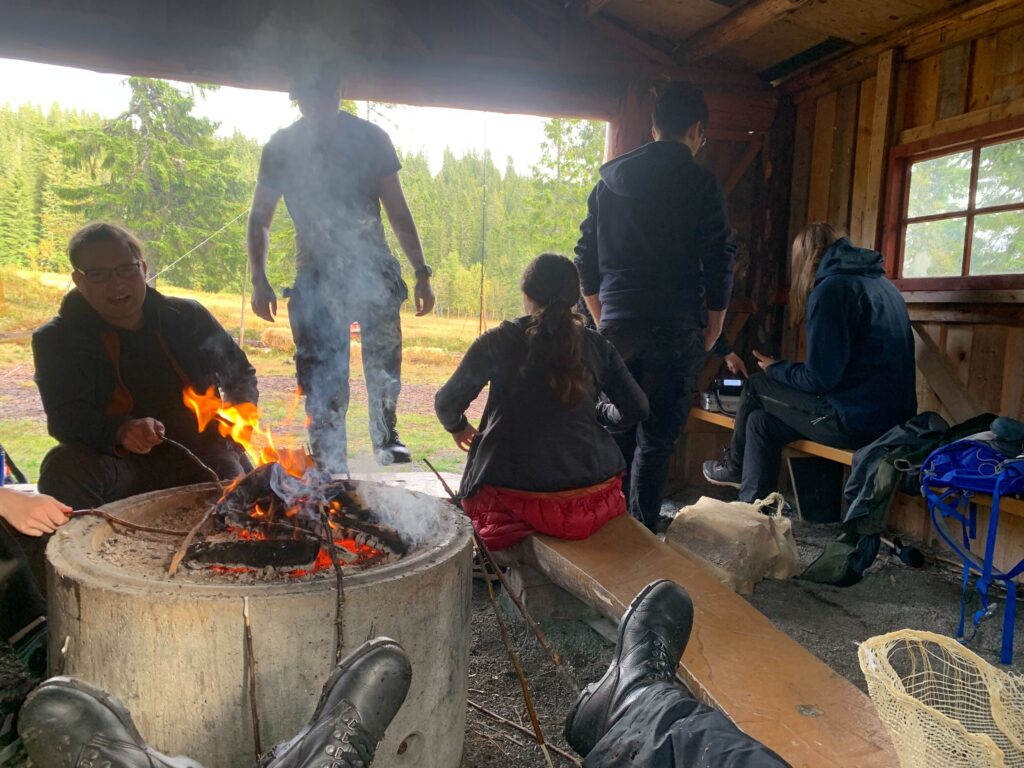
We always have a campfire on these trips. This time, it proved particularly successful on this rainy Saturday, warming up the whole shed while it was raining outside. It was quite cozy, and we alternated between grilling sausages and operating the radio. Thank you for the trip from Ellen, Mathias, Roberto, Simen, DB4STI, DO2MB, LB0CJ, LB2CK, LB3AK, LB3BK, LB3KK, and LB5DH!

Leave a Reply