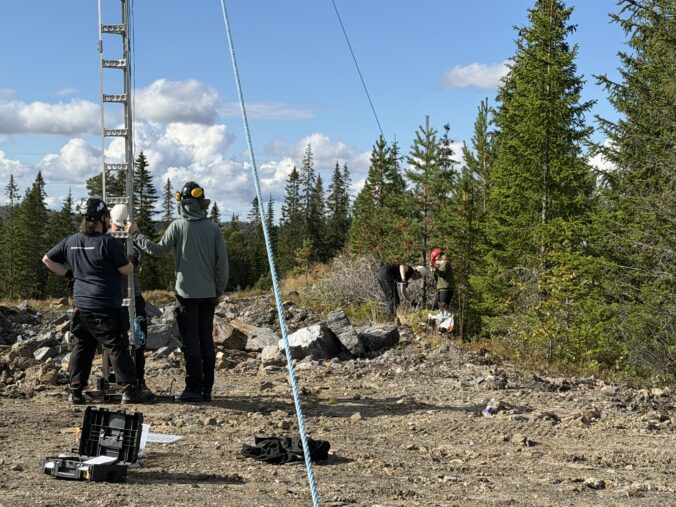
This year’s Field Day was once again held at Samatun by Lake Samsjøen in Melhus municipality, which has been the club’s regular QTH for the Field Day weekend ever since 2019. We greatly appreciate that the Red Cross lets us come back year after year!
Following last year’s success with a dedicated Field Day committee, we had a committee in place again this year, and planning started as early as spring. The committee was admittedly a bit smaller than last year, but self-appointed enthusiasts stepped up as the date approached, and Field Day it most certainly was!
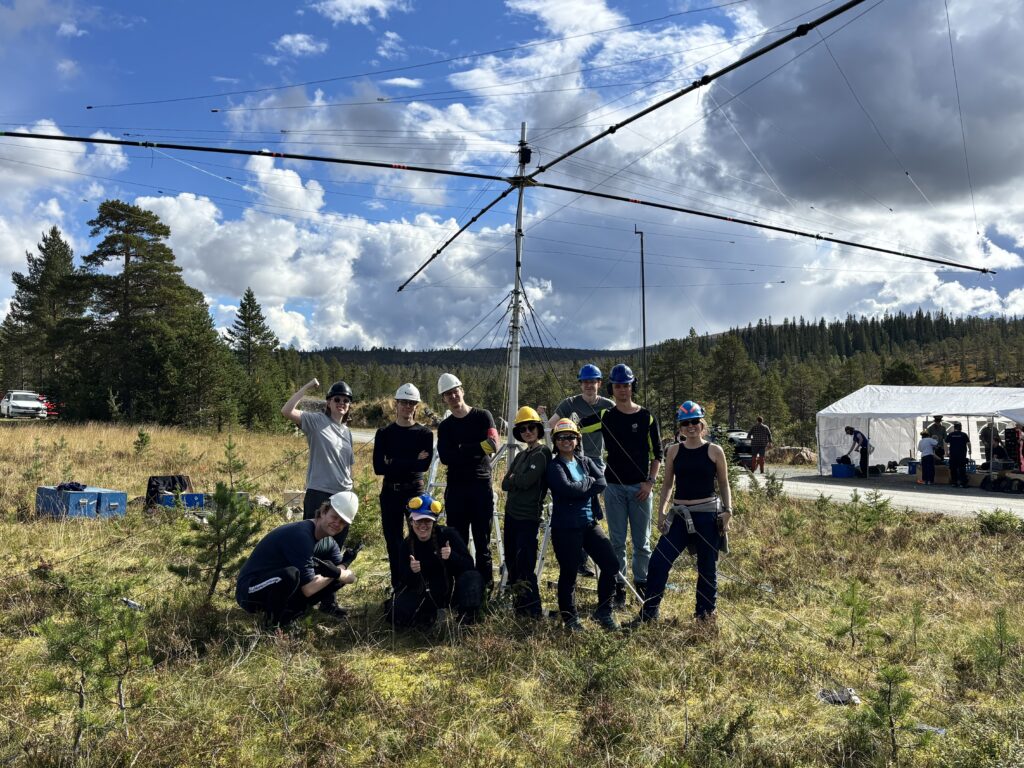
ARK turned out more than 40 participants, 12 of them unlicensed, with a good mix of old and new members. The newly joined members made a strong showing and were engaged both at the radios and during the mast setup. Plenty of radio was operated, and every single newcomer made their very first QSO, which hopefully left them wanting more!
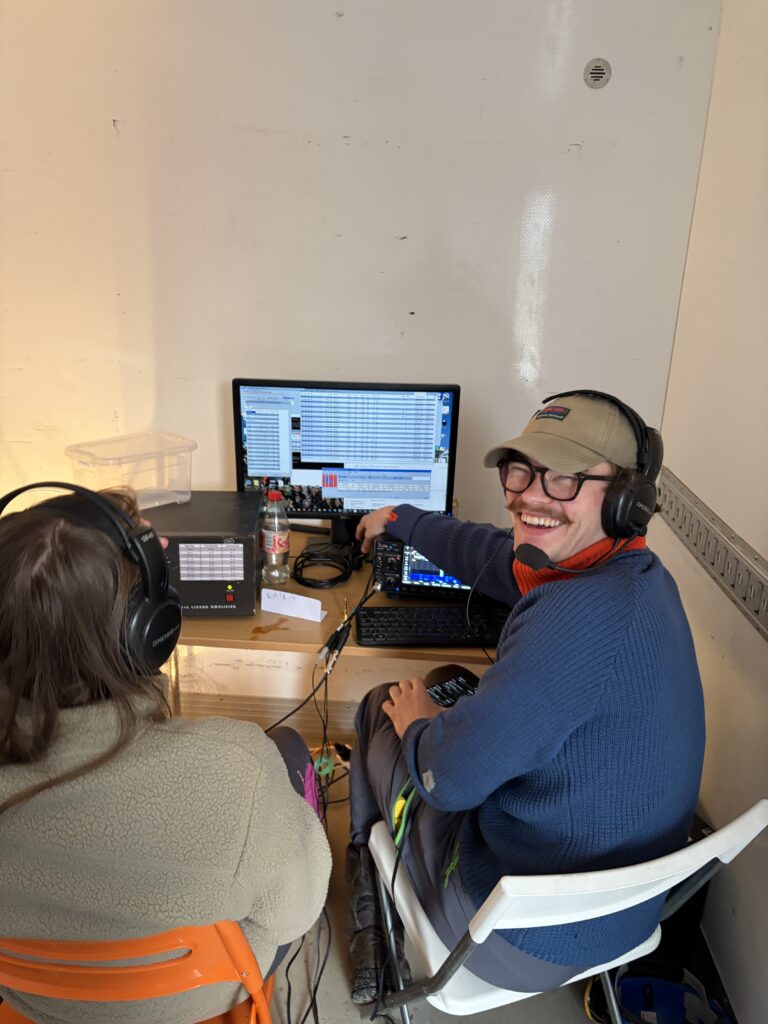
The contest got off to a slightly turbulent start, and die-hard QSO hunters had to (im)patiently wait for some of the shacks to get on the air. The network in the shack was causing problems, which affected the radios being controlled over it. 40 meters was active from the start, and after about an hour, 20 and 15 meters were also “smoking hot”! A few poor radio amateurs spent the evening troubleshooting IP addresses and links late into the night, and they were true heroes for getting everything up and running. Because once we really got going, things moved fast!
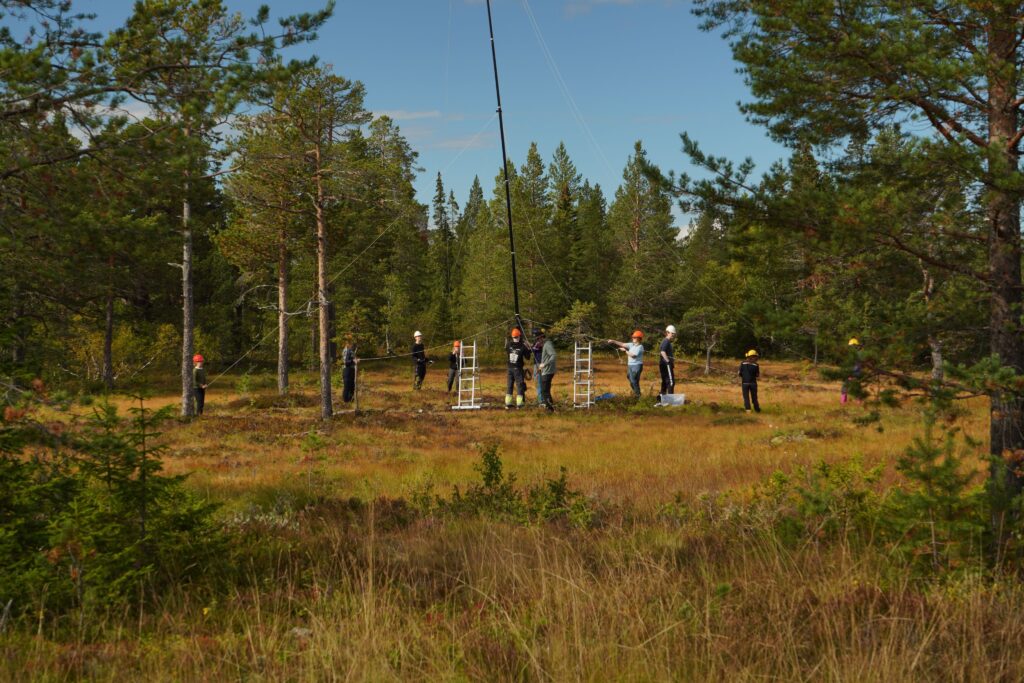
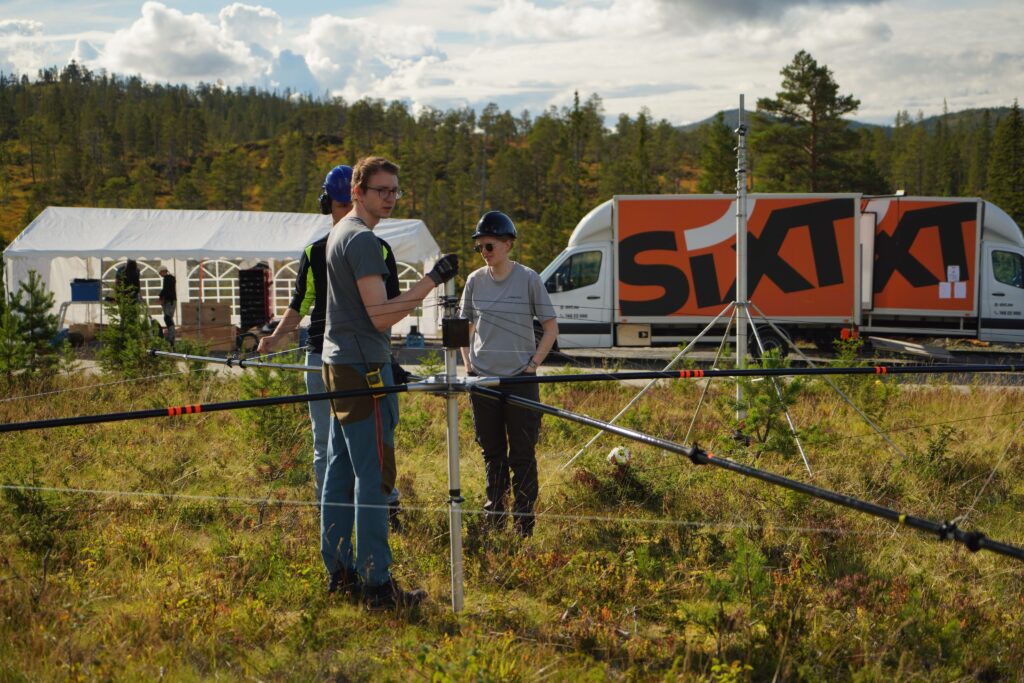
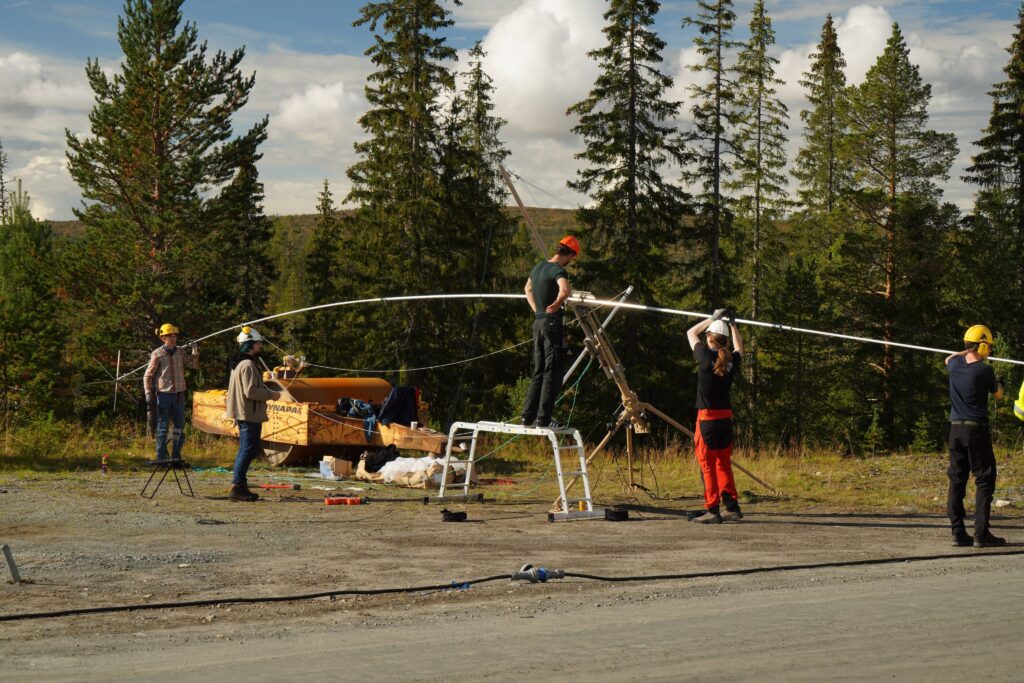
This year, too, we had a good selection of antennas in place. The Spiderbeam, a wire Yagi for 10, 15 and 20 meters, delivered as always. On 40 meters we used the Bananaphone antenna, mounted on the Comrod mast for the second year running. Dipoles for 160, 80 and 60 meters were strung between various masts and trees, in addition to our 26-meter-tall vertical antenna for 80 meters.
As always, the shack was equipped with several stations and a wide range of radios: Flex-6500, IC-7610, IC-756PROIII, IC-9100 and FT-450D. On the amplifier side we had a VL-1000, ACOM 1000 and AL-82. For the low-earth-orbit satellite SO-50 we used an Arrow antenna, a UV-K5 and a D878UVII+.
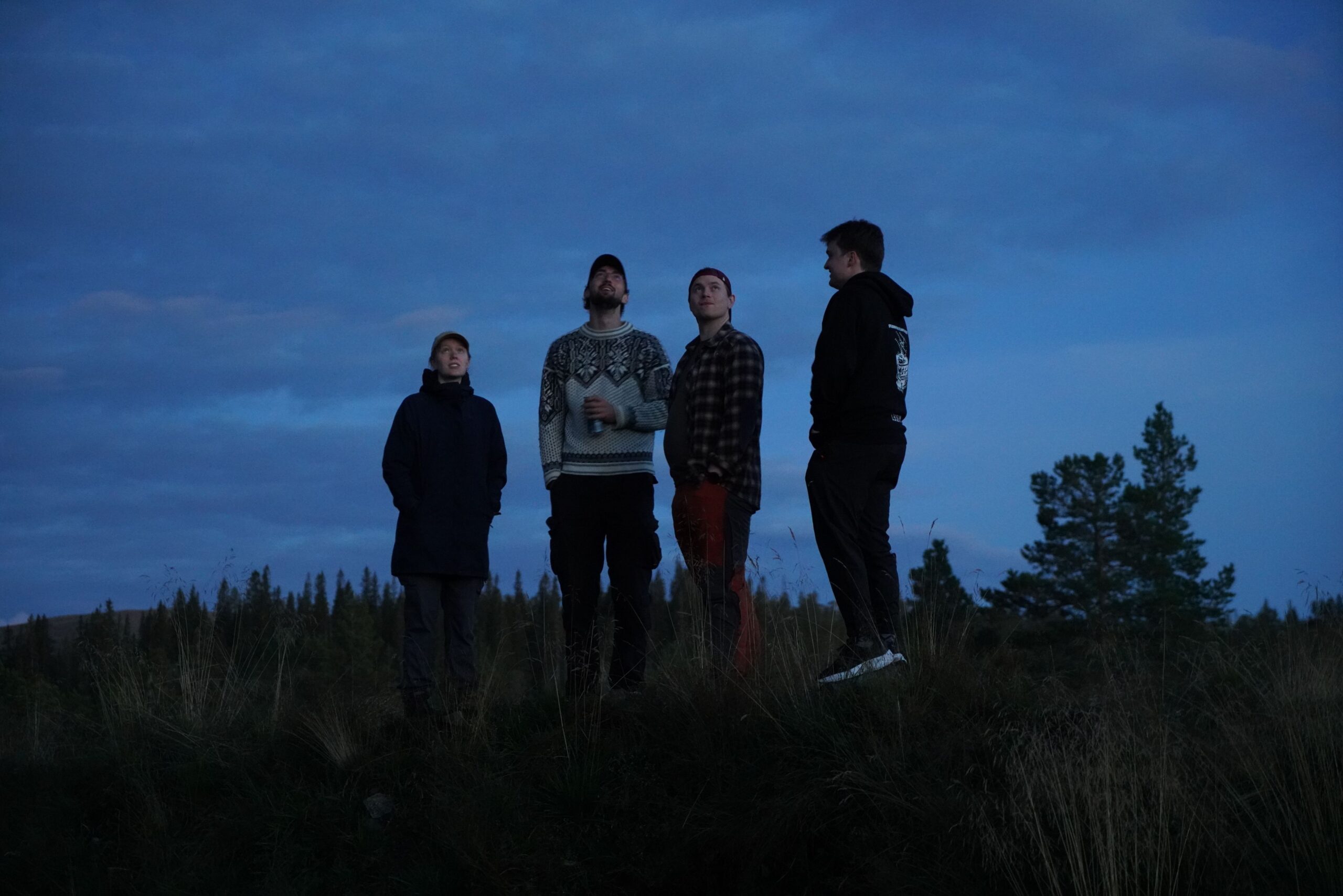
For the third year in a row, we held an Open Radio Day during Field Day. Even though we had advertised the event in local Facebook groups and with posters at the local grocery store, turnout was somewhat lower than we had hoped. Still, a couple of visitors dropped by during the scheduled time. We also had a somewhat unexpected but very welcome group of visitors later in the evening. One ARK member spotted four people with hiking backpacks in the distance, and they turned out to be German exchange students on their way to a cabin after a long day’s hike. They gladly accepted waffles and toasted sandwiches, and also got a short tour and an introduction to amateur radio and Field Day.
In addition to Open Radio Day, we organized a fox hunt. Three teams set out on the hunt, and it was a nice change of pace to get out of the shack and explore the area a bit. It eventually got dark, which probably made the search a little more challenging. Even so, spirits were high among the participants, and all the teams eventually found all the foxes!
With so many participants, there is naturally also a considerable need for food! Over the weekend we went through plenty of tacos, burgers and lots (!) of toasted sandwiches. Although cooking for more than 40 hungry radio amateurs can be quite a task, it all went surprisingly well.
We are very pleased with the result: a full 1,556 QSOs in the log, a notch better than last year! The operators with the most contacts were LB9JJ, DM1LN and LB6KK, while LB5DH brought in by far the most multipliers. Perhaps the most encouraging thing is that many of the operators had a high number of QSOs. That shows activity was strong across the shacks, that many people contributed well to the result, and that the shacks were staffed more or less around the clock. Looking more closely at which bands we used most, 20 m and 40 m made the biggest contributions, with 702 and 538 QSOs respectively. 80 m also contributed well with 155 QSOs. It was also great to get a number of contacts on 160 m, a band we have had very little activity on in recent years. On the other hand, we got no contacts at all on 10 m… We also made four QSOs via satellite, and we even got a couple of CW contacts – something we haven’t had in over ten years!
Field Day is over for this time, but we take with us good memories, new experiences and plenty of radio joy. We are already looking forward to a new Field Day in 2027!


Leave a Reply